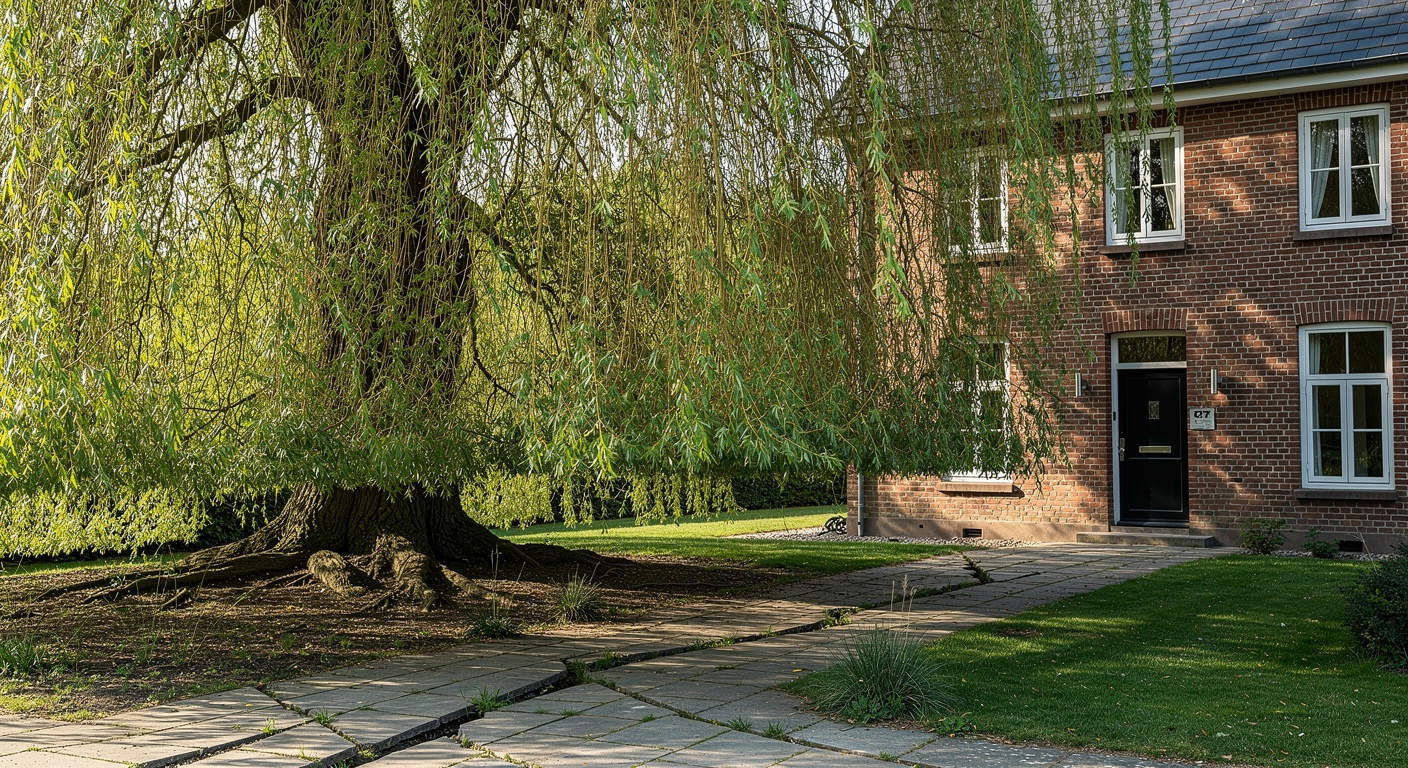
A plant beauty with sometimes serious consequences
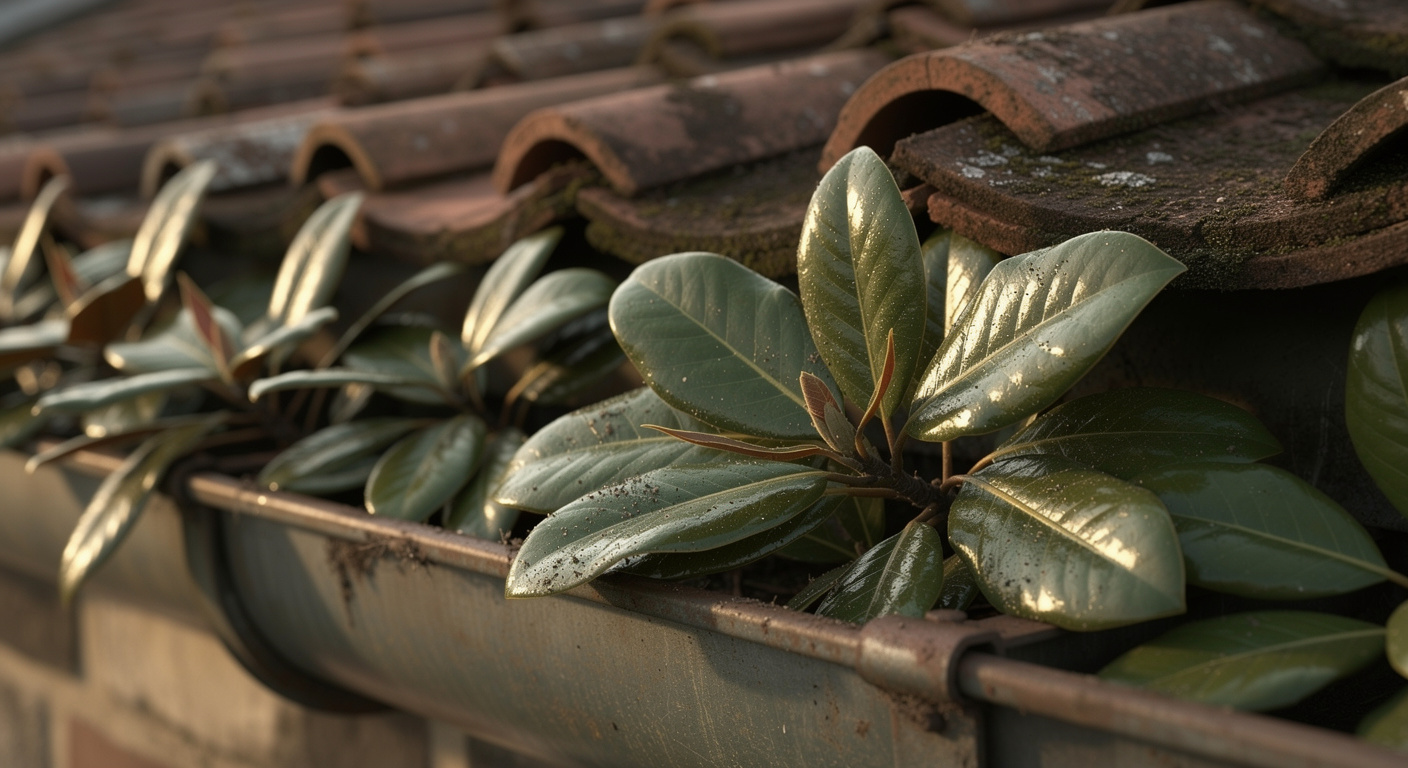
The idea of planting a tree close to their home appeals to many homeowners who want shade in the summer and better air quality. However, some species hide a very different technical reality. Take the example of the magnolia: this tree, often prized for its aesthetic appeal, can cause surprising damage. Its falling leaves tend to clog gutters, while its wood can damage the roof if it is too close. Beyond these superficial inconveniences, other species directly threaten the very structure of the building. Despite their harmless appearance, they can crack foundations, deform driveways, or clog underground networks.
The blacklist: ten species that threaten your structure
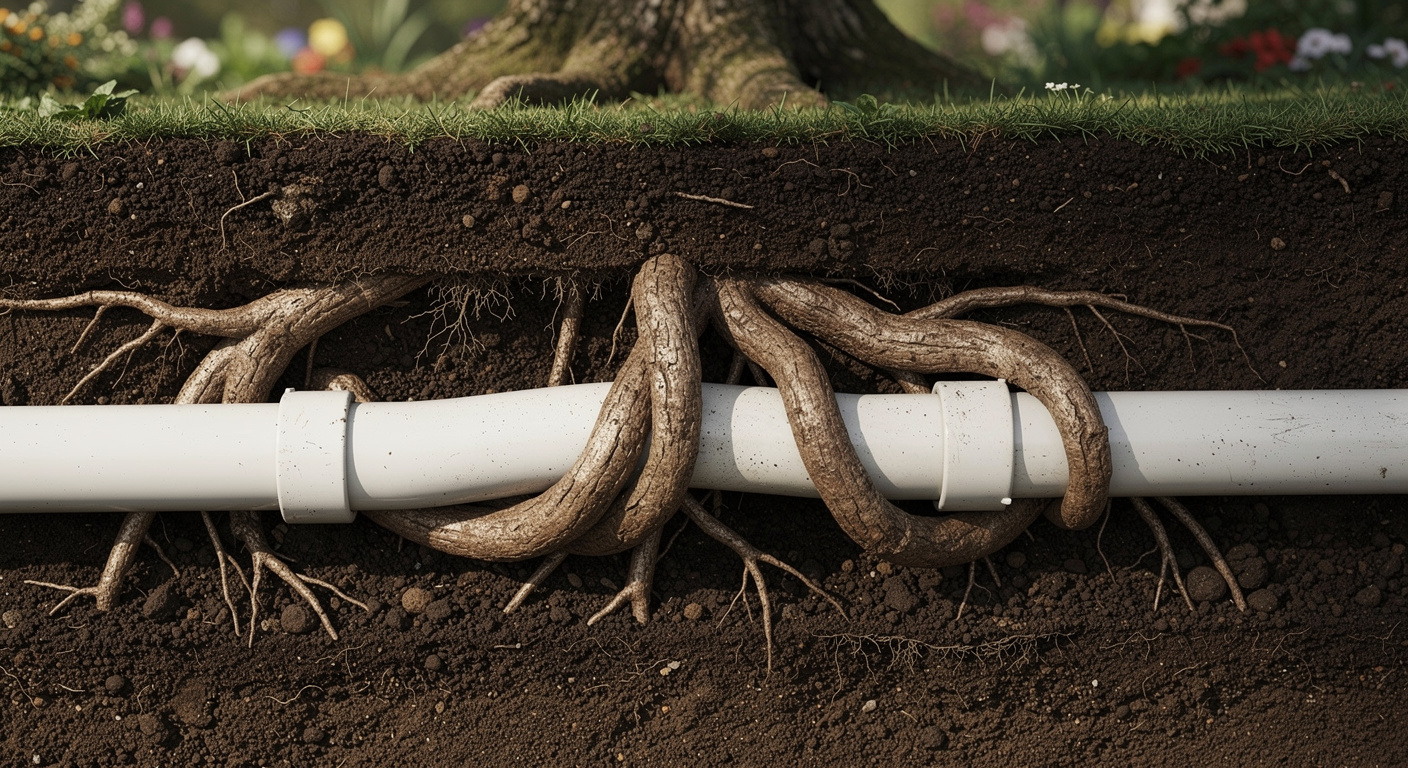
Not all tree species coexist harmoniously with concrete and stone. Several trees are known for their vigorous root systems or invasive behavior. The poplar, for example, has roots that can spread over twenty meters, causing soil uplift and wall cracks. Weeping willows, despite their visual poetry, have an extremely aggressive root system that often targets pipes and slabs. Similarly, alders, naturally attracted to moisture, endanger water pipes.
Large, sturdy trees such as the red oak and the plane tree anchor their roots with such force that they can damage foundations and underground networks and cause sidewalks to buckle. Other varieties pose problems due to their shallow roots: this is the case with the silver maple, its cousin the sycamore maple, and certain varieties of pine, which weaken the soil and outdoor structures. Finally, soil stability can be compromised by the mimosa and its spreading roots, or by the black locust, whose rapid growth and instability are considered unsuitable for residential areas.
Safe alternatives and rules to follow
To safely plant vegetation around a house, it is best to choose trees that grow at a moderate rate and have a non-invasive root system. Rowan, birch, ornamental crabapple and hawthorn are all suitable options: they beautify the exterior without threatening underground infrastructure such as septic tanks.
Beyond the choice of species, compliance with legislation is imperative. The French Civil Code sets strict rules: any tree exceeding 2 meters in height must be planted at least 2 meters from the property line. For plants smaller than this size, the minimum distance is 50 centimeters. To prevent neighborhood disputes and protect structures, it is recommended to maintain a safety distance of at least 3 meters. Before planting, it is essential to consult the Local Urban Planning Plan (PLU) to check for easements, rights of way, the presence of pipes or power lines, and to find out if a permit is required for certain protected species.
According to the source: monjardinmamaison.maison-travaux.fr
Created by humans, assisted by AI.