Beyond biohacking: the quest for cellular health

Humanity has always pursued the goal of longevity. From cryotherapy to fasting to plasma injections, many people are trying to « biohack » their bodies to gain a few extra years of life expectancy. However, a recent discovery suggests that the key to turning back time lies elsewhere: in regeneration from the inside out. Hao Li, PhD in biochemistry and biophysics and director of the Hillblom Center for the Biology of Aging at the University of California, San Francisco (UCSF), sums up this approach with a fundamental nuance: « Our desire to live longer is actually a desire to stay healthy longer. »
A recent study published in the Proceedings of the National Academy of Sciences (PNAS) indicates that science may be on its way to achieving this goal. According to Professor Li, lead author of the study, the ability to safely rejuvenate multiple tissues or a critical organ in humans could extend healthy lifespan.
A « software » error rather than physical wear and tear
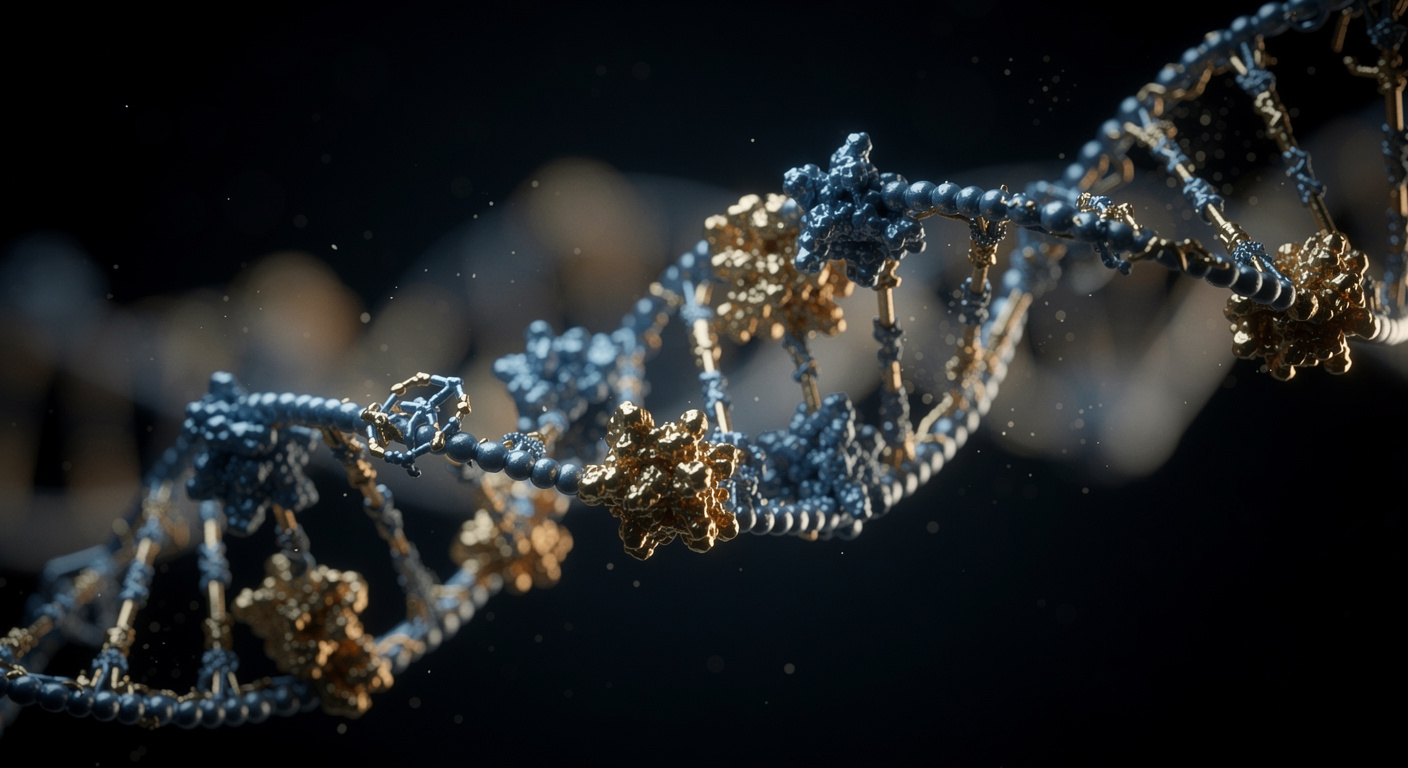
The findings of this research challenge the traditional view of aging. Aging may not necessarily be caused by irreversible damage to the body, but rather by poor regulation or misinterpretation of gene expression—the instructions that cells use to perform their functions, such as fighting disease. To test this hypothesis, the researchers manipulated transcription factors, the proteins responsible for activating and deactivating genes, in mouse cells.
The goal was to reset these cells with the correct instructions. The results of the experiment showed that the aging of diseased cells was reversed during treatment. In particular, the elderly mice showed « rejuvenated » livers, among other physiological improvements. Although this current study was conducted on rodents, the proteins identified share many similarities between mouse and human genetics. « We hope that targeting similar factors in similar tissues in humans will have a comparable rejuvenating effect, » says Hao Li.
Towards a « master switch » for youth?
With age, the body undergoes tangible changes: arteries stiffen, bones shrink, joints weaken, and muscles lose strength. Recovery from illness or injury becomes slower, and the decrease in subcutaneous tissue makes the skin more vulnerable to bruising. By counteracting these negative effects, science could pave the way for a longer, more robust life. « It is possible that we could identify a master switch capable of de-aging the cells of an entire human to reverse or slow down aging, » says Professor Li, calling it a « great challenge. »
Technologies that enable specific genes in a human cell to be activated or deactivated already exist, such as activation or inhibition via CRISPR or RNA interference. The combination of large-scale single-cell data, the fusion of biology and technology, and the use of artificial intelligence tools now make it possible to identify the determining factors of cell function. This research could be specifically targeted to reverse cellular aging.
Systemic perspectives and clinical application
For now, researchers are focusing their efforts on certain age-related diseases by targeting specific tissues or organs. An interesting hypothesis is emerging from this work: rejuvenating a single organ, such as the liver, could have a restorative effect on the entire body thanks to systemic effects. According to Hao Li, a rejuvenated liver could secrete « youth factors » into the blood. Currently, many gene editing technologies, including CRISPR, RNA interference (RNAi), and viral vectors, are applicable to both murine and human organisms, although their effectiveness and implementation may differ. With this in mind, a team of researchers, including Hao Li, founded Junevity Inc. to pursue the clinical application of their discoveries, with a current focus on age-related diseases.
However, there is still a long way to go. Human biology differs from that of mice in many crucial ways. Much more research on the safety of long-term treatments will be needed before this discovery can make the leap from the laboratory to supporting human longevity. Nevertheless, it is a promising start.
According to the source: popularmechanics.com
Created by humans, assisted by AI.