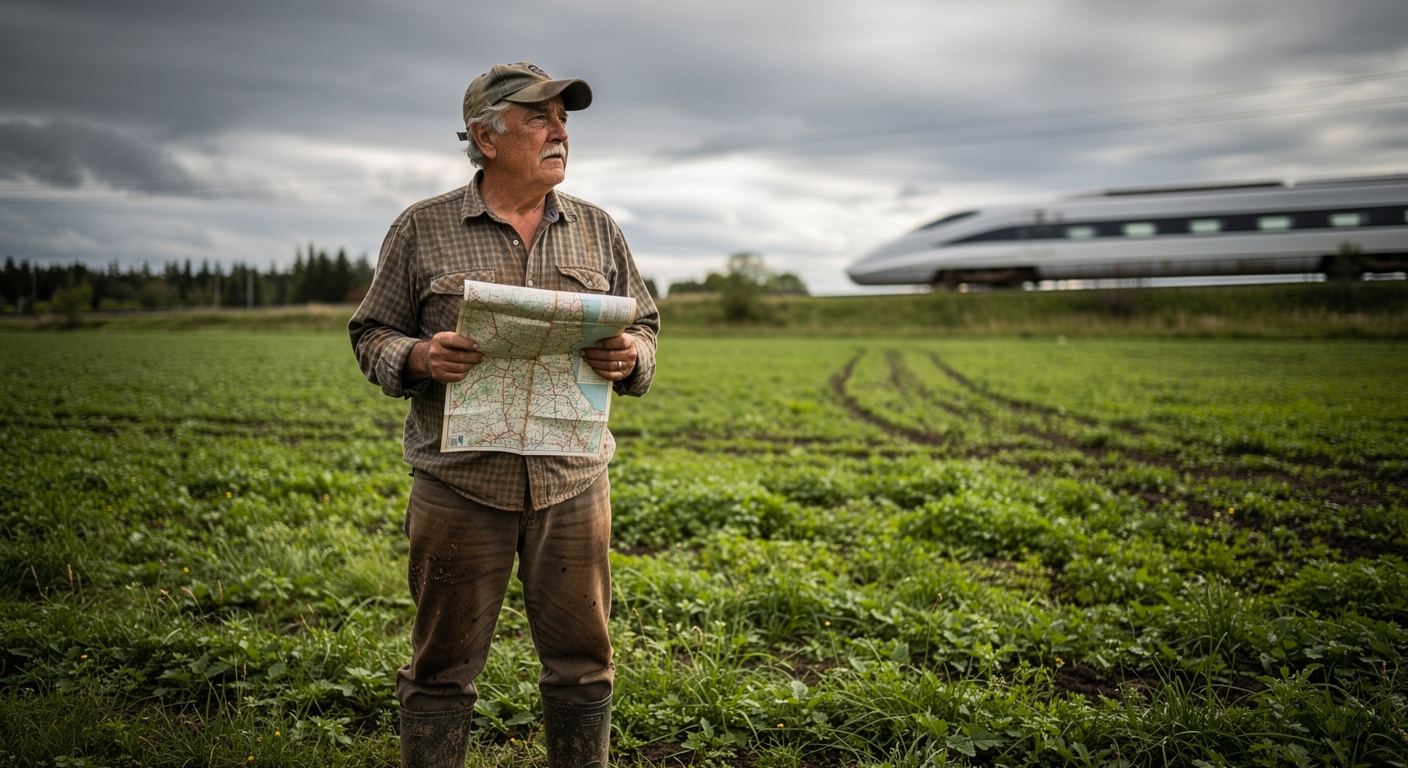
Introduction
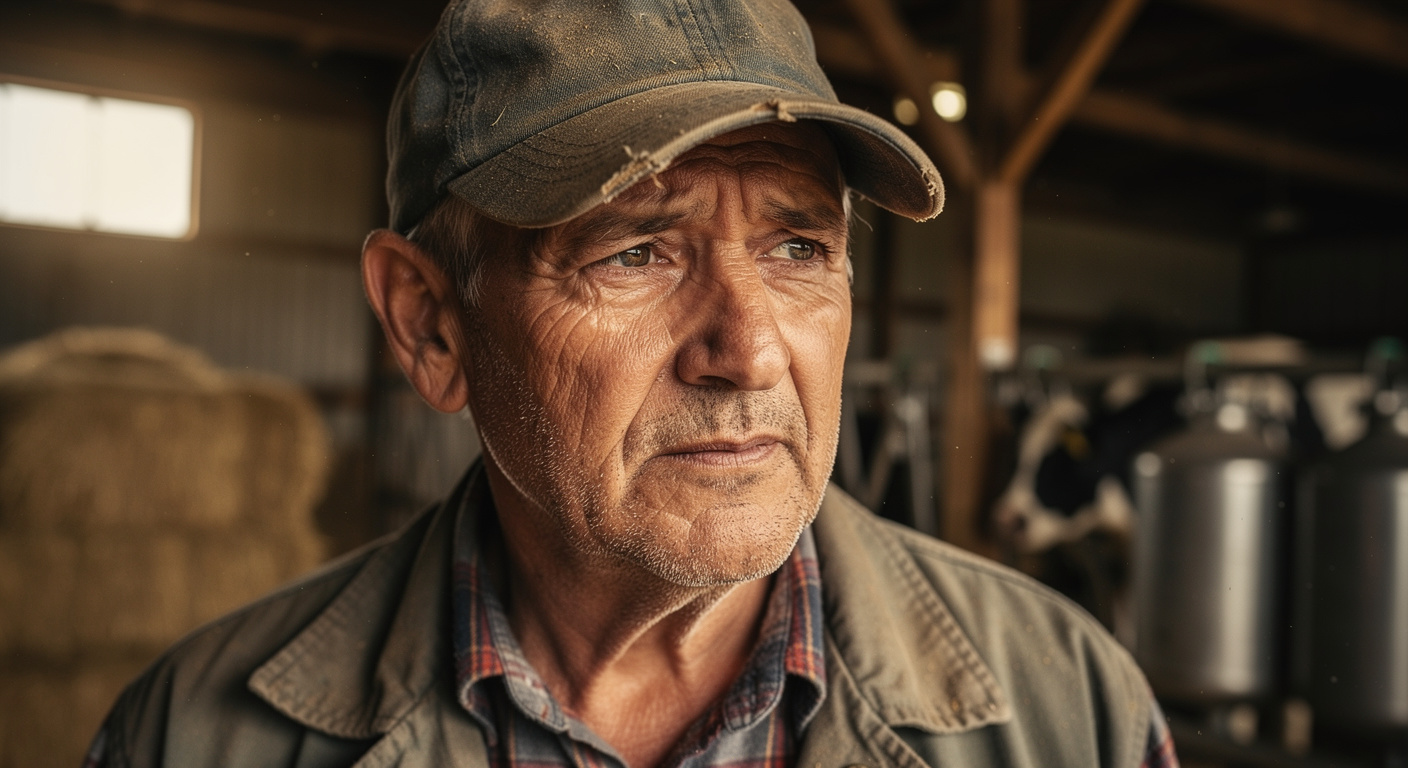
Some words hurt more than others. In Mirabel, saying « expropriation » is like pressing on an old scar that is still sensitive. Do you know the story? In 1969, the federal government brutally seized 97,000 acres of land to build an airport that would never live up to its promises. It was a collective wound.
For Christian Couvrette, this is not ancient history. He was four years old when his family was among the 1,700 households expropriated. Now in his sixties, he has returned to this land to run a dairy farm in Sainte-Scholastique. But now the past is catching up with him: his farm is located right in the study area for the new high-speed train (TGV) that is supposed to connect Quebec City to Toronto. « We don’t want to go through that again, » he says, visibly moved. And he’s not the only one who’s worried.
An unclear route, very real concerns
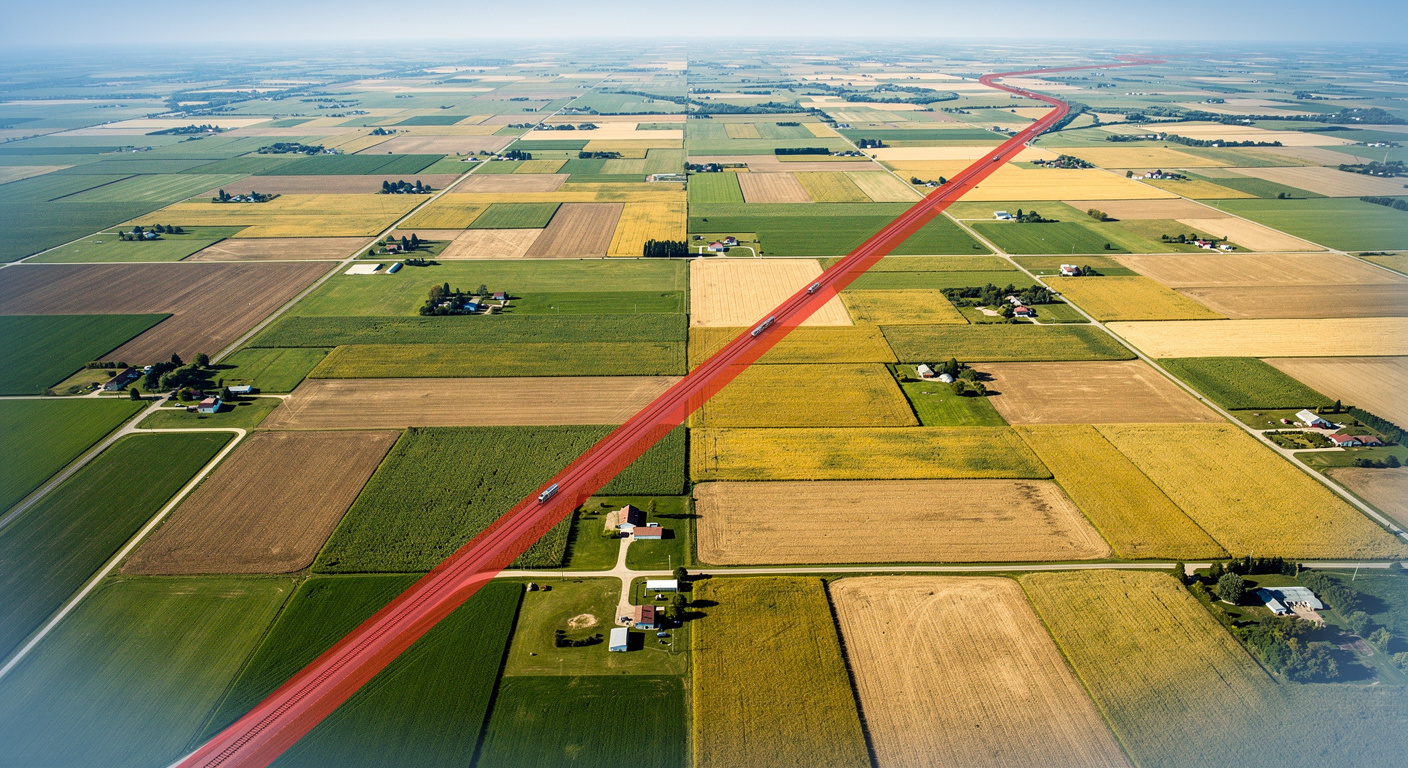
In concrete terms, what are we talking about? The project aims to connect Quebec City, Trois-Rivières, Laval, Montreal, and Toronto. For now, Alto—the public developer—has identified a « corridor » about ten kilometers wide for its consultations. Rest assured, the final railway will only be 40 to 60 meters wide, but uncertainty remains: who will be spared? Who will see their fields cut in half? In Mirabel, there is a persistent feeling of waste. People remember the long battle for the return of land, which began only in 1985, for plots acquired « for nothing. » Today, Bloc Québécois MP Jean-Denis Garon is outraged: the route is likely to pass through areas already traumatized by the past, and so far, no consultations have taken place on site. Mayor Roxane Therrien is also still angry. She deplores the lack of information sessions in her town, even though consultations began in January. On the Alto side, Philippe Archambault, vice president of communications, is trying to calm things down: dates will be added, probably in February. « We have heard Mirabel’s request, » he promises.
Bill C-15: forced passage or modernization?

Beyond the route itself, it is the method that is causing concern. The minority government is attempting to pass Bill C-15, a 600-page tome. Its goal? To accelerate projects deemed to be of « national interest. » But for local elected officials, this looks very much like a blank check.
Jean-Denis Garon and Roxane Therrien fear that this law will allow expropriation notices to be sent by simple email, with no possibility of appeal after 30 days and, above all, no mandatory public hearings. « They want to retain control for two years and set land prices unilaterally, » warns the MP. The mayor warns that if the rules change, « we will bare our teeth. » She also proposes a common-sense solution: that the federal government use the land it already owns within the perimeter of the former airport to spare farmers.
Ottawa tries to reassure: « We will negotiate. »

Faced with discontent, Ottawa responded through Transport Minister Steven MacKinnon. His argument? Bill C-15 is directly inspired by what is already being done in Quebec for the REM and in Ontario. « Of course we will negotiate with the owners on a voluntary basis, » he assured the House.
Transport Canada, through its spokesperson Hicham Ayoun, clarified that the right to object has not been eliminated, but transformed. The 30-day period for written objections remains in place, and the files will be reviewed. This marks the end of systematic public hearings, which were deemed too slow for large modern construction projects, but the ministry promises « respect and transparency. »
What happens next? Philippe Archambault of Alto is adamant: nothing is set in stone. The year 2026 will be used to refine the route through a second wave of consultations. Land acquisitions would not begin until 2027, and expropriation will remain a « last resort » measure. The goal is to stick to existing infrastructure to limit damage.
Conclusion

For Mirabel residents, a new waiting period is beginning. Between promises of amicable negotiations and the specter of fast-track legislation, trust remains to be built. One thing is certain: four stops are planned in Quebec (Laval, Montreal, Trois-Rivières, Quebec City), but the price to be paid for agricultural land remains the big unknown in the equation.
According to the source: ici.radio-canada.ca
Created by humans, assisted by AI.