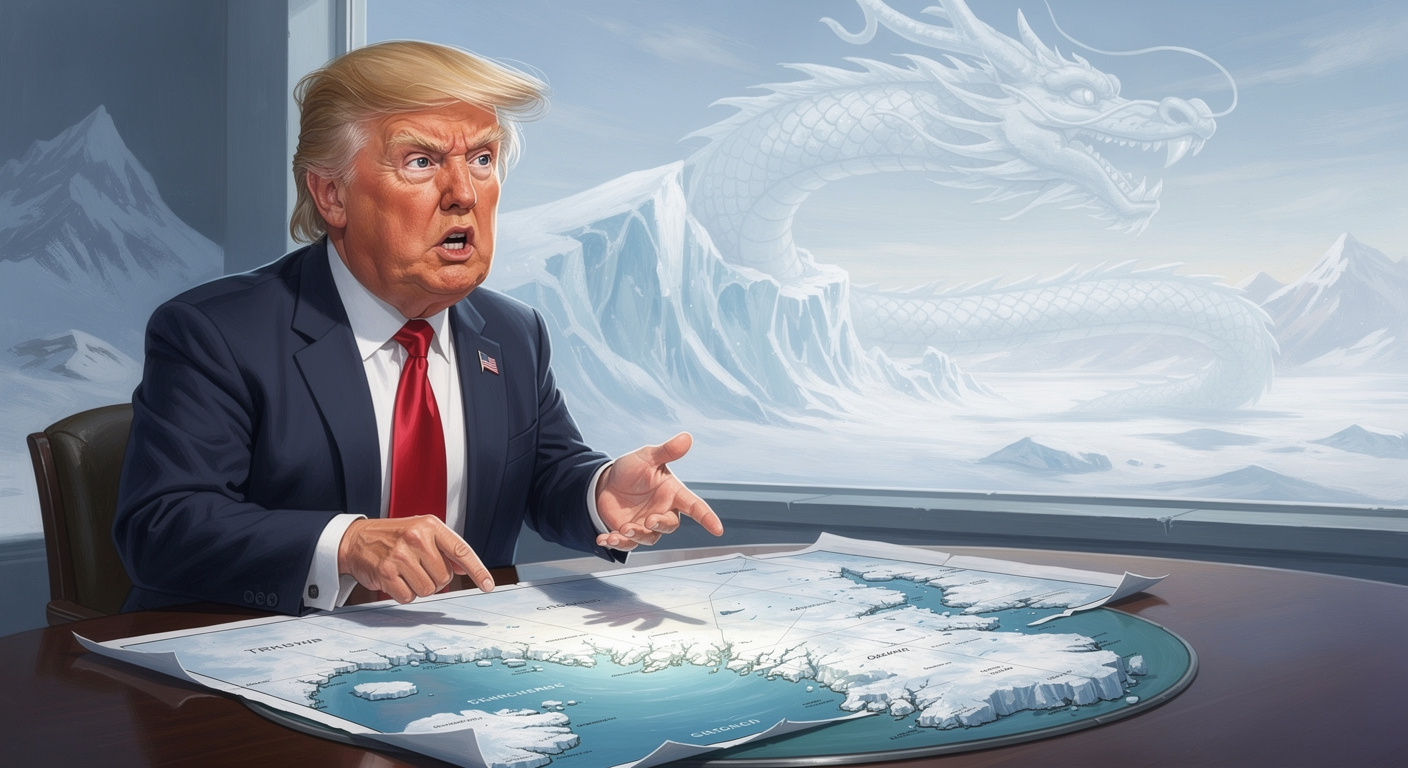
Between paranoia and reality on the ground
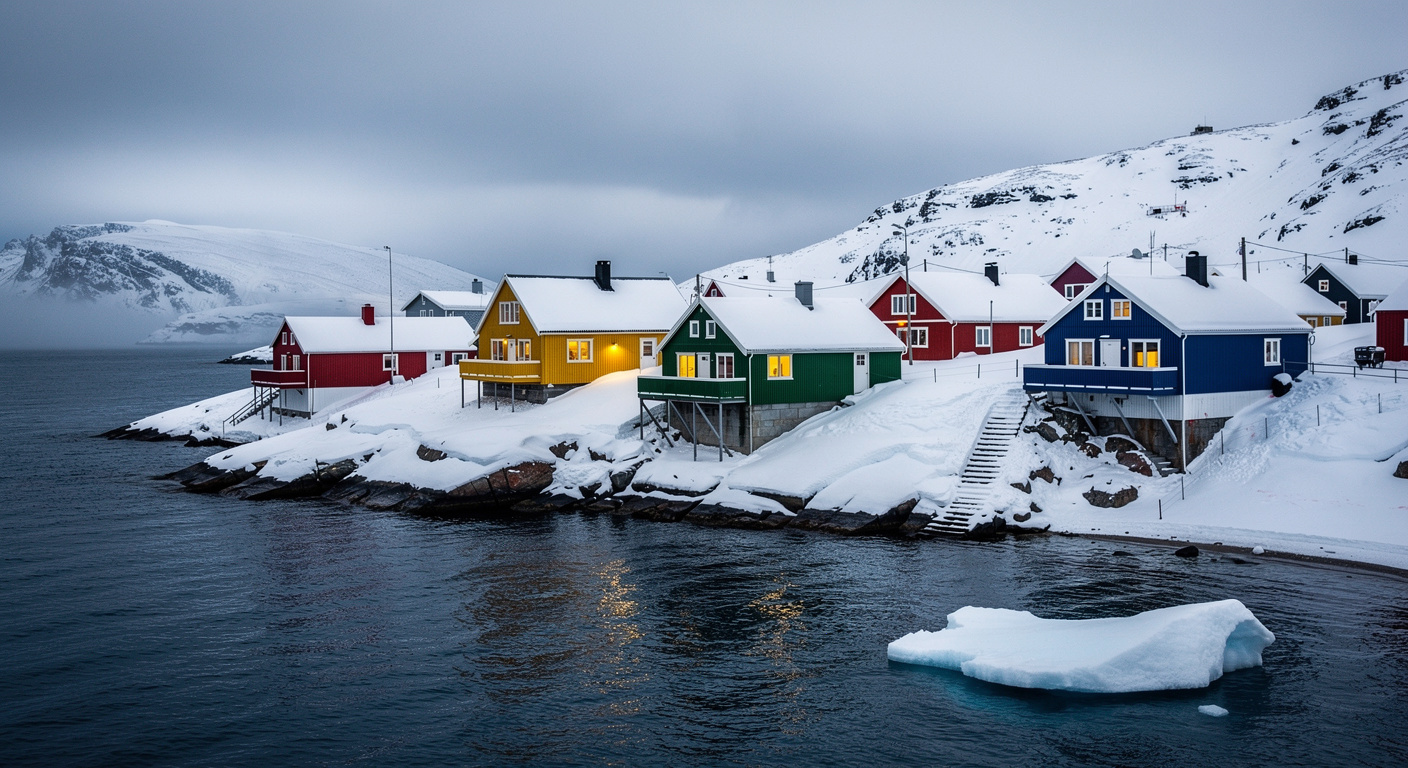
You probably remember the idea that made headlines around the world: the United States considering annexing Greenland. Why? Because US President Donald Trump insists that the threat is real. According to him, Russian ships and submarines are lurking in the area, justifying immediate takeover of this autonomous Danish territory.
But what is the reality on the ground? If we listen to the experts who live there, we are far from the truth. For Marc Lanteigne, who teaches political science at the University of Tromsø in Norway and the University of Greenland in Nuuk, the idea of a Chinese military presence off the coast of the island is pure fiction. The evidence is clear: there are no Chinese or Russian ships in the area. China’s real footprint on the ground? For now, it remains very limited.
The « Polar Silk Road » at a standstill?
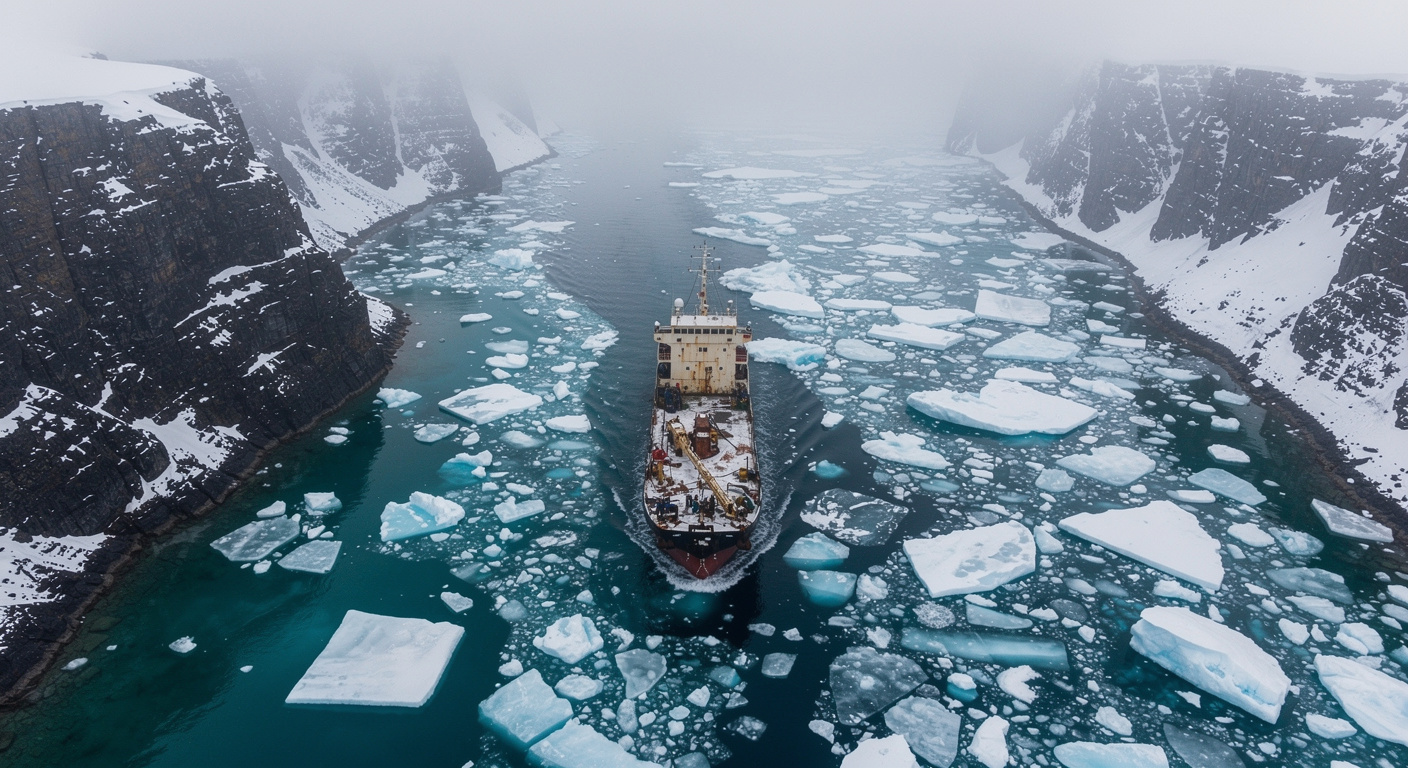
This does not prevent Beijing from jostling for position. For the past decade, China’s interest in the Arctic has been unwavering. It even proclaimed itself a « quasi-Arctic state » in 2018. This is a bold claim, given that its northernmost point is still nearly 1,500 kilometers from the Arctic Circle! At the time, the plan was clear: launch a « Polar Silk Road » and invest heavily in airports and mines. Except that things did not go as planned. Mathieu Duchâtel, director of international studies at the Institut Montaigne, is categorical: over ten years, the intention was there, but political resistance was fierce. The result? A series of failures. The purchase of a naval base, airport expansion, telecoms… everything was blocked or abandoned. The most striking example dates back to 2019. Denmark, under pressure from Washington citing national security, vetoed an investment project. The argument? Civil airport infrastructure can too easily be used for military purposes. Copenhagen has very effective blocking mechanisms, and they use them. So, what about the economy in all this? Marc Lanteigne points out that ties between Beijing and Nuuk remain very modest: a little fishing, some tourism, and that’s it. Even the four mining projects involving Chinese partners, proposed seven or eight years ago, are at a standstill. None are active today.
Moscow, the real dance partner
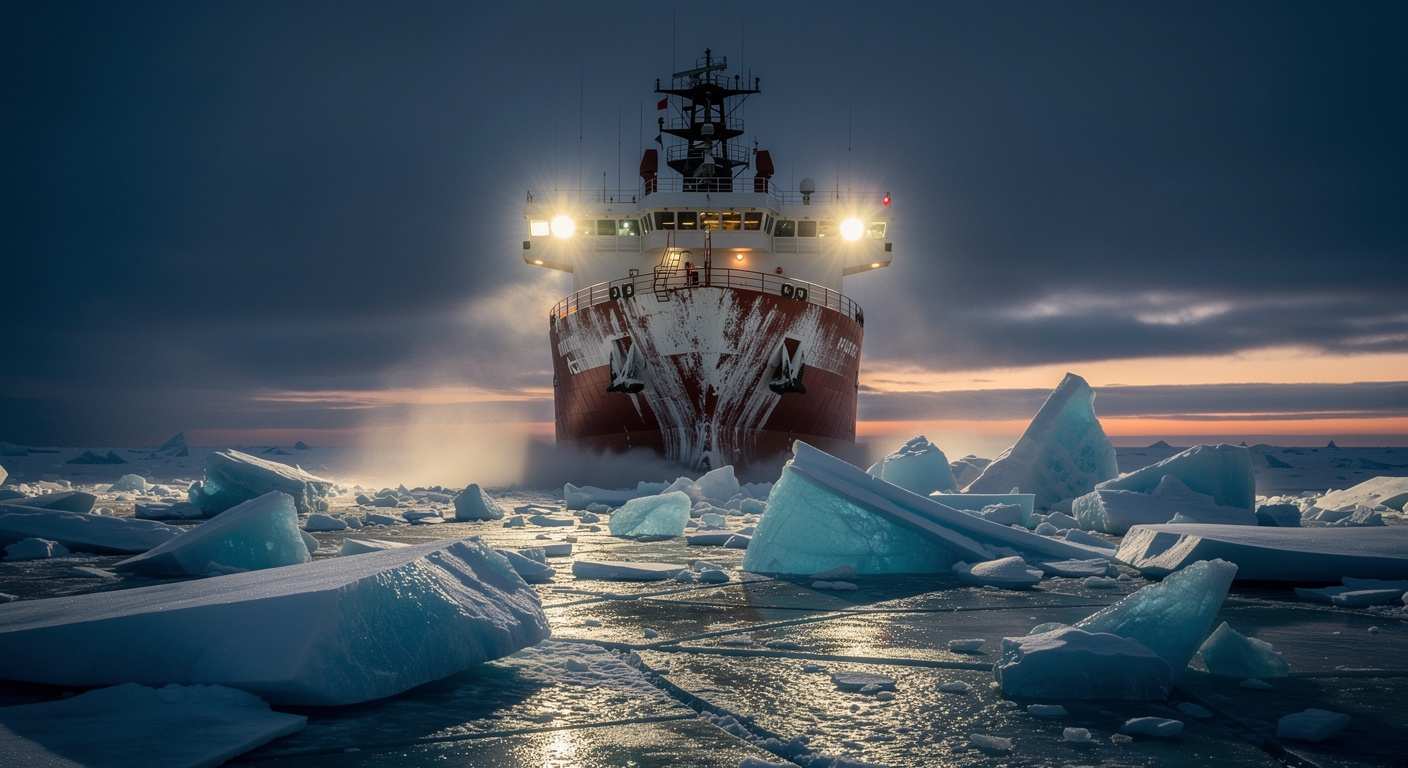
While things are stalling in Greenland, there is movement along the Russian coast. With global warming, melting ice is opening up the Northern Sea Route. It is a tempting shortcut: from Asia to Europe in just 20 days. Of course, it is still a long way from replacing the Suez Canal. The route remains seasonal, costly, and dangerous. As proof, in 2025, only 14 Chinese ships used it, mainly to transport Russian gas. But China is seriously considering it for the future.
The real geopolitical turning point came after the invasion of Ukraine in 2022. Moscow, now isolated, depends on Beijing for its finances and technology. The two giants are growing closer: joint patrols in the Bering Strait, a cooperation agreement between coast guards signed in 2023… This is where China’s presence is becoming tangible.
Science as a Trojan horse?
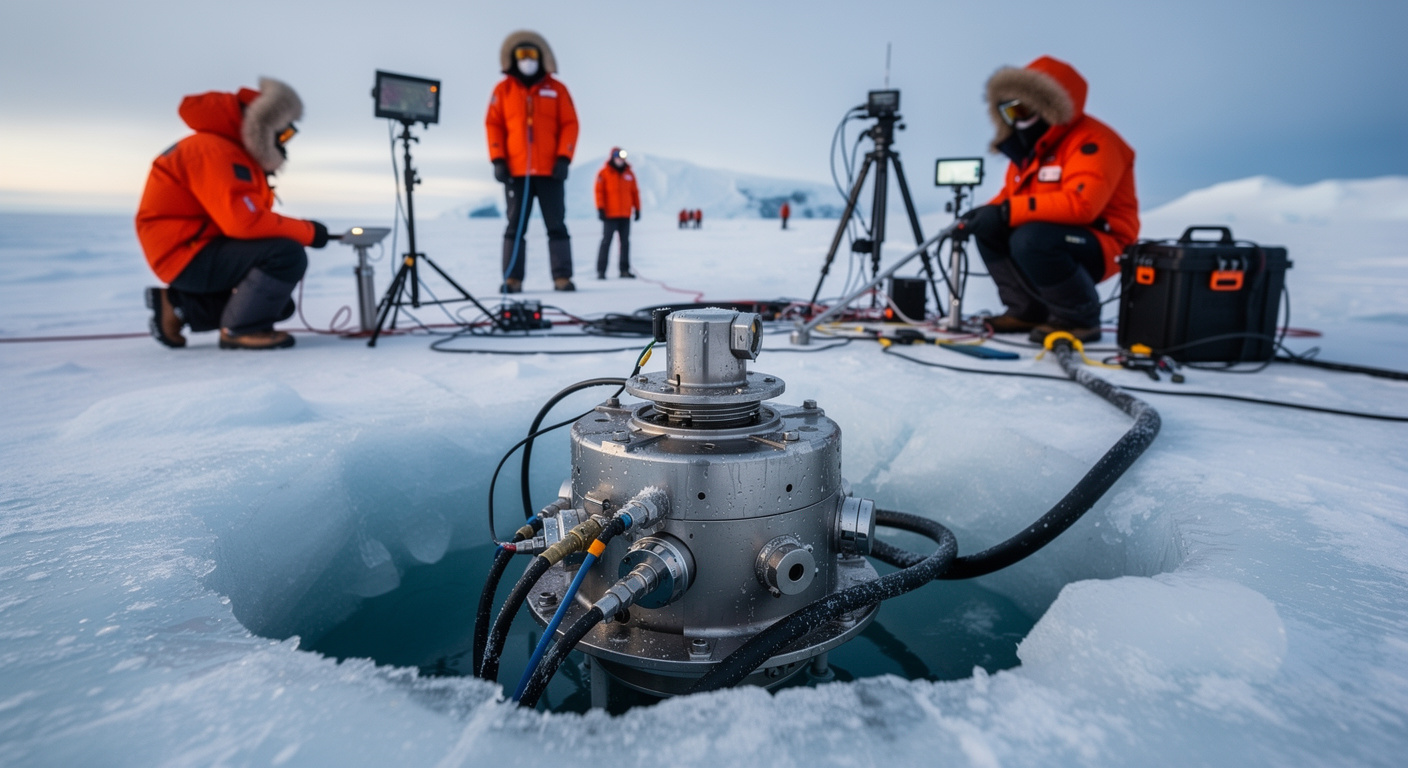
Appearances can be deceiving. While China may not have soldiers in Greenland, it is investing heavily in science. Did you know that it now has five icebreakers? That’s two more than the United States. It is increasing the number of scientific missions, officially for research purposes.
But Marc Lanteigne raises a crucial point: this data is a double-edged sword. Seabed mapping, sonar, atmospheric measurements… what scientists use, the military also uses. This is known as dual use.
Beijing is also fighting a battle of image. Faced with a United States that it describes as trapped in a Cold War mentality, China wants to embody responsibility. Its message to the countries of the South and the BRICS is simple: the Arctic must not be the preserve of NATO and Russia.
However, mistrust remains. As Mathieu Duchâtel points out, building ports or critical infrastructure with China creates vulnerability. These are levers that Beijing could pull in the event of conflict. In short, the warning that keeps coming back is that behind the diplomatic handshake, the risk of dependence is never far away.
According to the source: ici.radio-canada.ca
Created by humans, assisted by AI.