An invisible threat spreading northward
Until recently, it was thought that this mainly affected Africa, Latin America, and Asia. But things are changing. As Christoph Grunau and Ronaldo Augusto, two experts from the University of Perpignan Via Domitia, explain, the disease is now reaching southern Europe. Cases have been reported in Corsica in recent years. This is no longer science fiction. The problem is that the complications can be terrible. We are talking about risks ranging from liver to bladder cancer. Today, combating this scourge is no longer just a local issue for southern countries; it has become a global challenge that requires, I believe, constant vigilance and international cooperation, because our environment is changing, and so are diseases.
Mechanics of a parasite: from snails to our organs
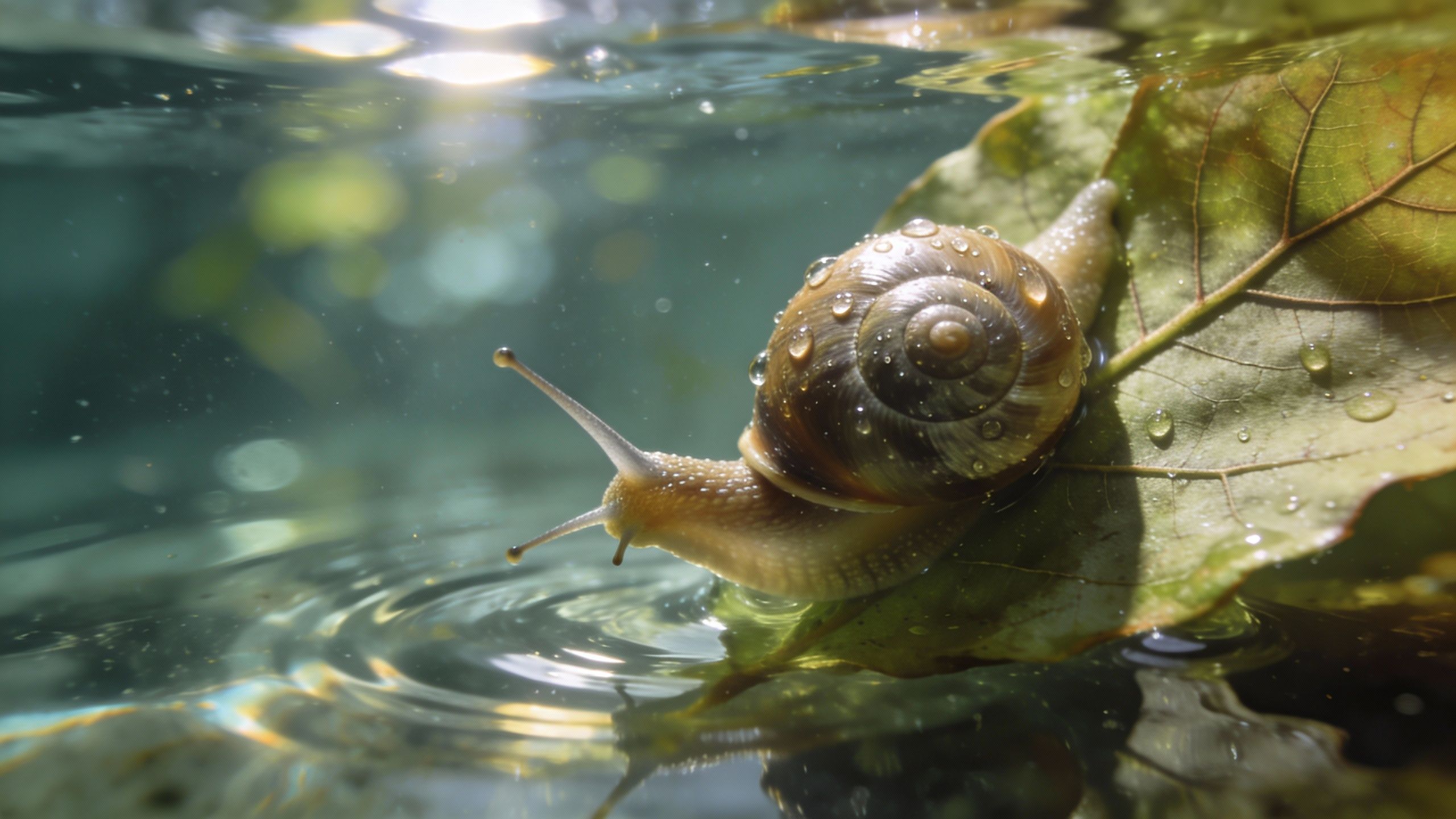
But how exactly do you catch it? It’s a complex but fascinating cycle. It all starts with small freshwater snails. Schistosome larvae infect these mollusks, multiply inside them, and then are released into the water. They then seek out a mammal—it could be a rodent, livestock, or us humans—that is swimming nearby. Upon contact, the larvae pierce the skin, travel to the liver to become adults, and eventually settle in the veins near the intestine or bladder. The most insidious thing about this disease is its silence. At first, there may be just a little irritation or a slight fever, but often there are no symptoms for months. The real damage comes from the hundreds of eggs laid each day by the females. Some are eliminated naturally (contaminating the water again via feces or urine), but other eggs remain stuck in our tissues, causing severe inflammation.
It is important to note that symptoms vary greatly depending on the species. For intestinal schistosomiasis (caused by Schistosoma mansoni, found in Africa, Brazil, and the Caribbean), symptoms include abdominal pain, diarrhea, and blood in the stool. If left untreated, there is a risk of hepatomegaly (enlarged liver), sometimes with ascites (fluid in the abdomen) and an enlarged spleen (splenomegaly). In the later stages, there is a real risk of liver cancer.
Other variants exist: Schistosoma japonicum is prevalent in China and the Philippines, while Schistosoma mekongi affects Cambodia and Laos. In Central Africa, Schistosoma guineansis is also found. The form that concerns us in Europe is urogenital schistosomiasis, linked to Schistosoma haematobium. The typical sign here is hematuria, or blood in the urine. In the long term, this can cause fibrosis of the bladder, damage the kidneys, and lead to bladder cancer. In children, it often causes anemia and growth retardation. It is serious, very serious.
A world tour of infection hotspots, from the Amazon to Corsica

On the other side of the Atlantic, in Brazil, it is mainly the intestinal form that dominates, with the snail Biomphalaria glabrata. It was thought to be a rural problem, linked to a lack of drinking water, but epidemics have been discovered in urban areas, much to everyone’s surprise! Sometimes this is due to rodents, sometimes to poor sanitation. In Asia, it’s another story altogether with Schistosoma japonicum. This parasite infects everyone: humans, cattle, rodents. With traditional rice farming and flooding, contact is constant, and the snail vector, Oncomelania hupensis, thrives in these wetlands.
And here? Well, schistosomiasis can be surprising. Between 2013 and 2022, tourists contracted the disease in Corsica after swimming in the Cavu River. The tests were conclusive: Bulinus truncatus snails and the S. haematobium parasite were found on the island. It was probably introduced by travelers from Senegal. This proves one thing: our European ecosystems are vulnerable. Climate, dams, and the future: why vigilance is needed

Models already predict that southern Europe, in fact the entire Mediterranean basin, could become a sustainable transmission zone. Snails such as Planorbarius metidjensis and Bulinus truncatus are already there, in southern Europe. They are just waiting for the parasite. In the laboratory, researchers are working hard with international centers to understand these dispersals and perhaps even genetically modify the snails or parasites to render them harmless.
To protect ourselves, beyond praziquantel treatments in at-risk areas, we need to rethink our infrastructure. Schistosomiasis is no longer a neglected tropical disease; it is an emerging infection knocking at our door. Ultimately, understanding this disease means realizing how closely our health is linked to our environment and economic inequalities.
According to the source: science-et-vie.com Created by humans, assisted by AI.