A new map of the cosmos is taking shape

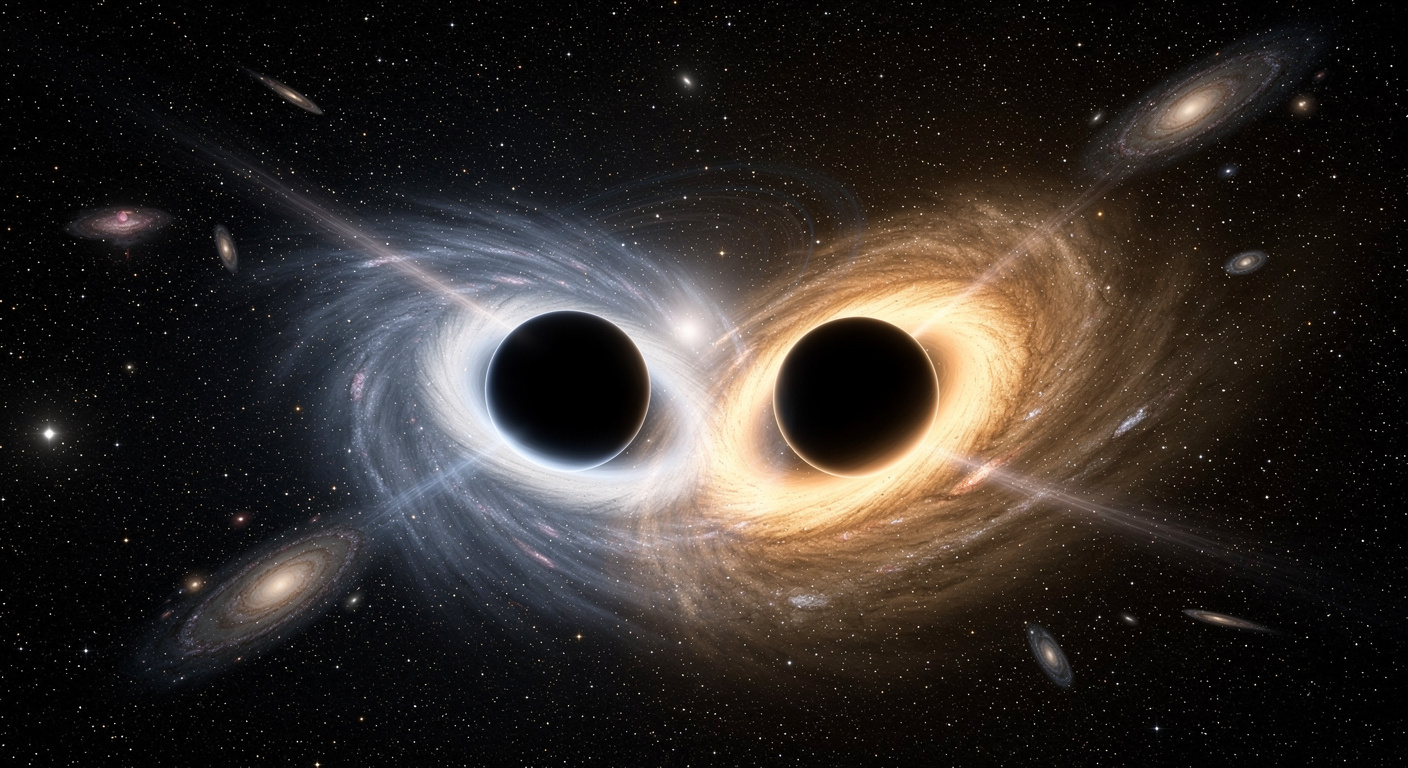
An international collaboration of astrophysicists, including researchers from Yale University, has just taken a decisive step forward in space exploration. The team has designed and tested a detection system using gravitational waves to map the position of merging black holes, technically known as supermassive black hole binaries. According to the researchers, such a map would offer a novel way of understanding astronomy and physics, comparable to the impact that X-rays and radio waves had in previous eras. The new protocol, demonstrated by NANOGrav (North American Nanohertz Observatory for Gravitational Waves), now provides a concrete method for populating this map. Chiara Mingarelli, assistant professor of physics at Yale’s Faculty of Arts and Sciences and a member of NANOGrav, emphasizes the importance of this breakthrough: « Our discovery provides the scientific community with the first concrete benchmarks for developing and testing protocols for detecting individual and continuous gravitational wave sources. »
From pulsars to quasars: a change in method
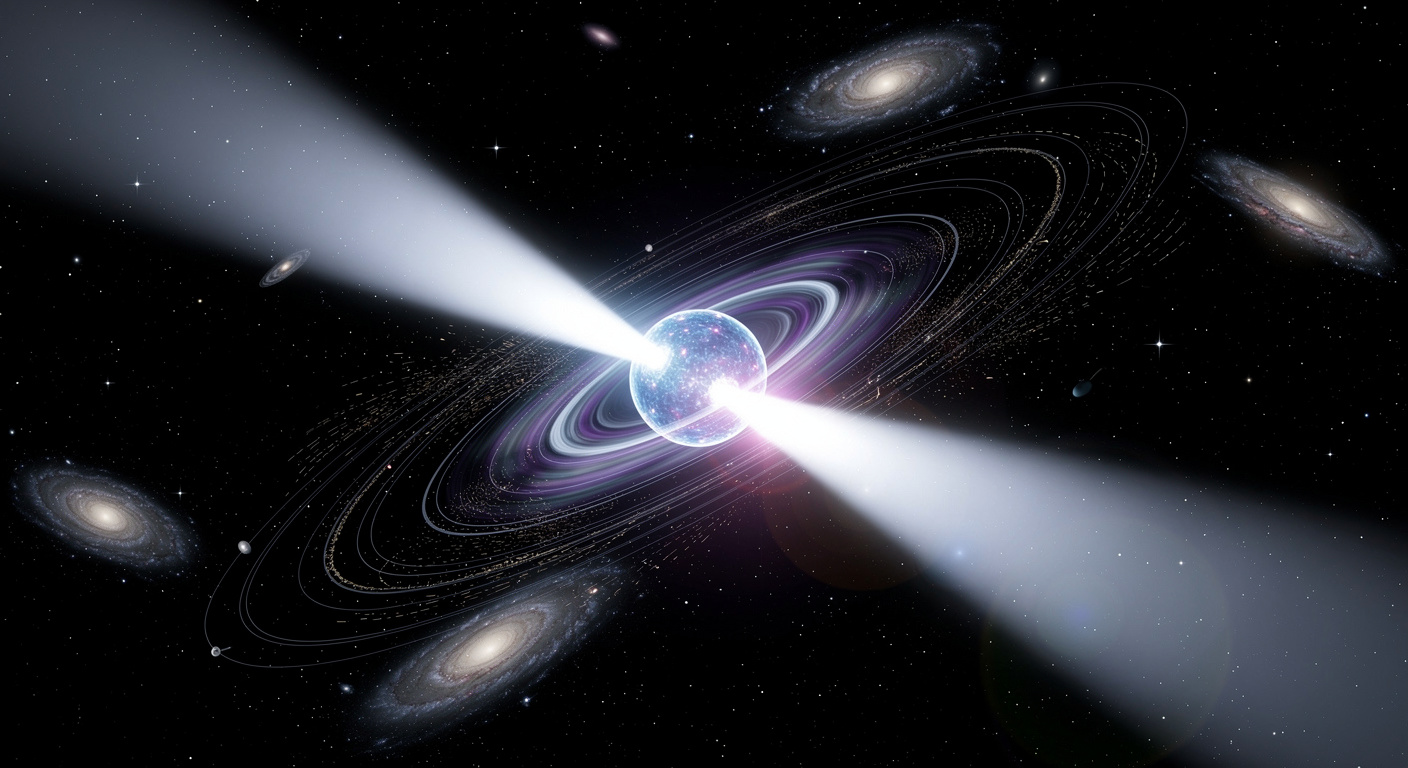
In 2023, NANOGrav reported the discovery of the first direct evidence of a gravitational wave background. These waves, caused by the slow merger of pairs of supermassive black holes, could be detected from Earth within a low-frequency energy field. To achieve this, the organization based its detection methods on pulsars, the collapsed cores of massive stars that, as they spin rapidly, emit precisely timed radio signals.
The international collaborators then focused their research on individual waves. Previous theoretical work by Chiara Mingarelli and her collaborators suggested that black hole mergers are five times more likely to occur in galaxies hosting a quasar. A quasar acts as a bright « beacon » in space, powered by gas falling into a black hole. Building on this hypothesis, the new study published in The Astrophysical Journal Letters details a targeted research framework from start to finish. The team conducted specific research on supermassive black hole binaries within 114 active galactic nuclei, areas at the center of galaxies where a black hole attracts matter.
When pop culture meets astrophysics
This innovative methodology, combining measurements of the gravitational wave background with variable measurements of quasars, has borne fruit. Researchers have identified two specific candidates: SDSS J1536+0411 and SDSS J0729+4008. These celestial objects have been given unexpected nicknames: « Rohan » and « Gondor, » inspired by J.R.R. Tolkien’s The Lord of the Rings.
The explanation for these names combines academic recognition and literary references. « The names come from both people and pop culture, » explains Chiara Mingarelli. « Rohan was the first, in honor of Rohan Shivakumar, the Yale student who first analyzed it. Gondor came next because, well… the beacons were lit! » This is a direct reference to the novel, where the heroes join forces after the beacons are lit between the kingdoms of Gondor and Rohan.
Towards definitive confirmation

For scientists, even a small number of confirmed black hole binaries will help anchor the gravitational wave background map. In the coming months, NANOGrav will continue to identify and locate these binaries. According to Chiara Mingarelli, this discovery opens up intriguing prospects for gravitational wave theory, data analysis, galaxy mergers, and black hole astrophysics.
« Our work has laid out a roadmap for a systematic framework for detecting supermassive black hole binaries, » she concludes. « We conducted a systematic and targeted search, developed a rigorous protocol, and two targets stood out as examples warranting follow-up. »
According to the source: phys.org
Created by humans, assisted by AI.