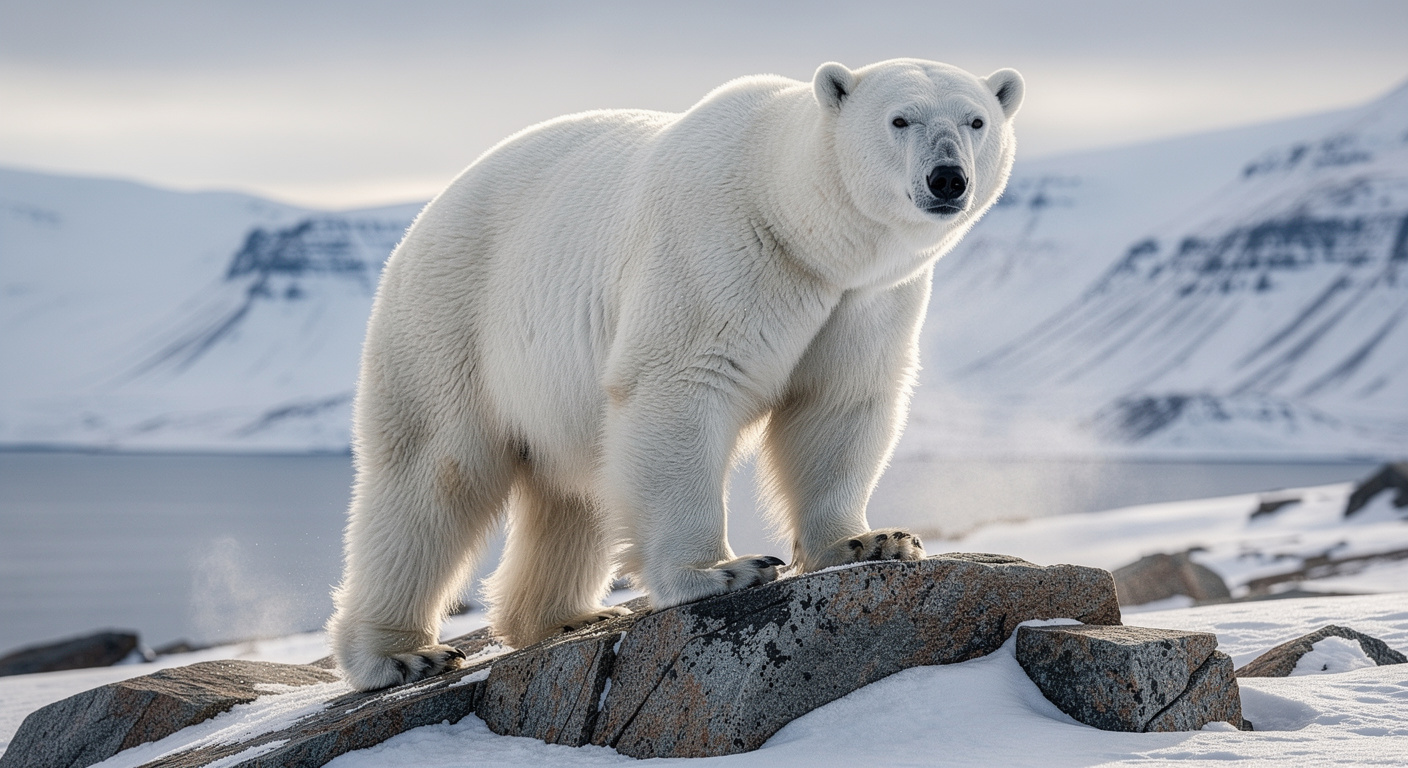
The paradox of the obese bear
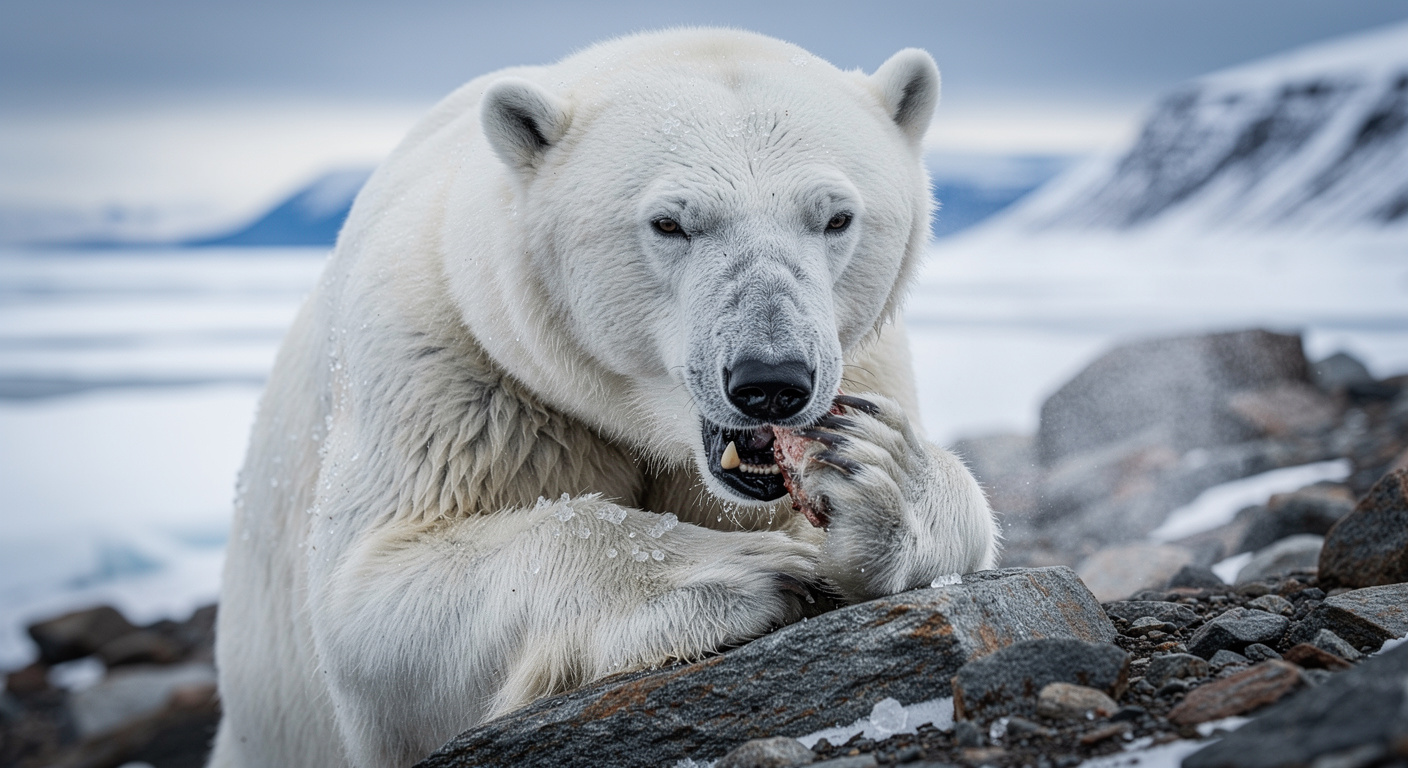
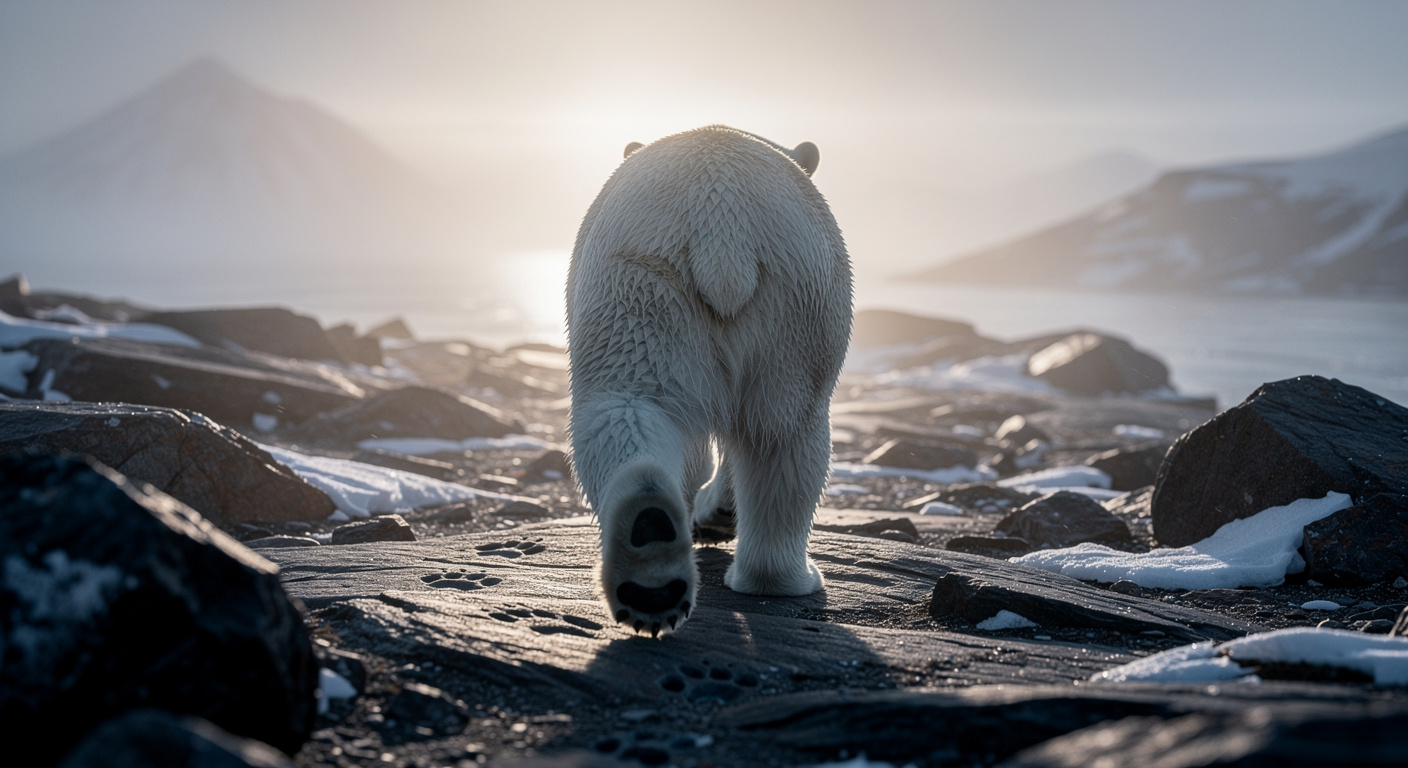
You may remember this tweet from 2014. Donald Trump, true to form, claimed: « Just released: ICE CAPS are at record levels, POLAR BEAR population has never been stronger. » At the time, climate experts were up in arms. And for good reason: the first part about the ice was false. But the strangest thing about this story? It seems that the second part is true, at least in one specific place on the globe. Head to Svalbard, a Norwegian archipelago lost in the Barents Sea. There, scientists have been weighing polar bears for three decades. And this week, their long-term study, published in the highly respected journal Scientific Reports, delivered an uncomfortable truth: despite around 100 more ice-free days than in the early 1990s, bears are, on average, bigger and healthier than they were a generation ago.
How is this possible when their habitat is melting? Quite simply, adaptation. Some bears have become opportunistic. They feed on walrus carcasses, catch reindeer, or raid bird colonies. Paradoxically, ringed seals may even be easier to catch when the ice is broken up.
When biology becomes a political weapon
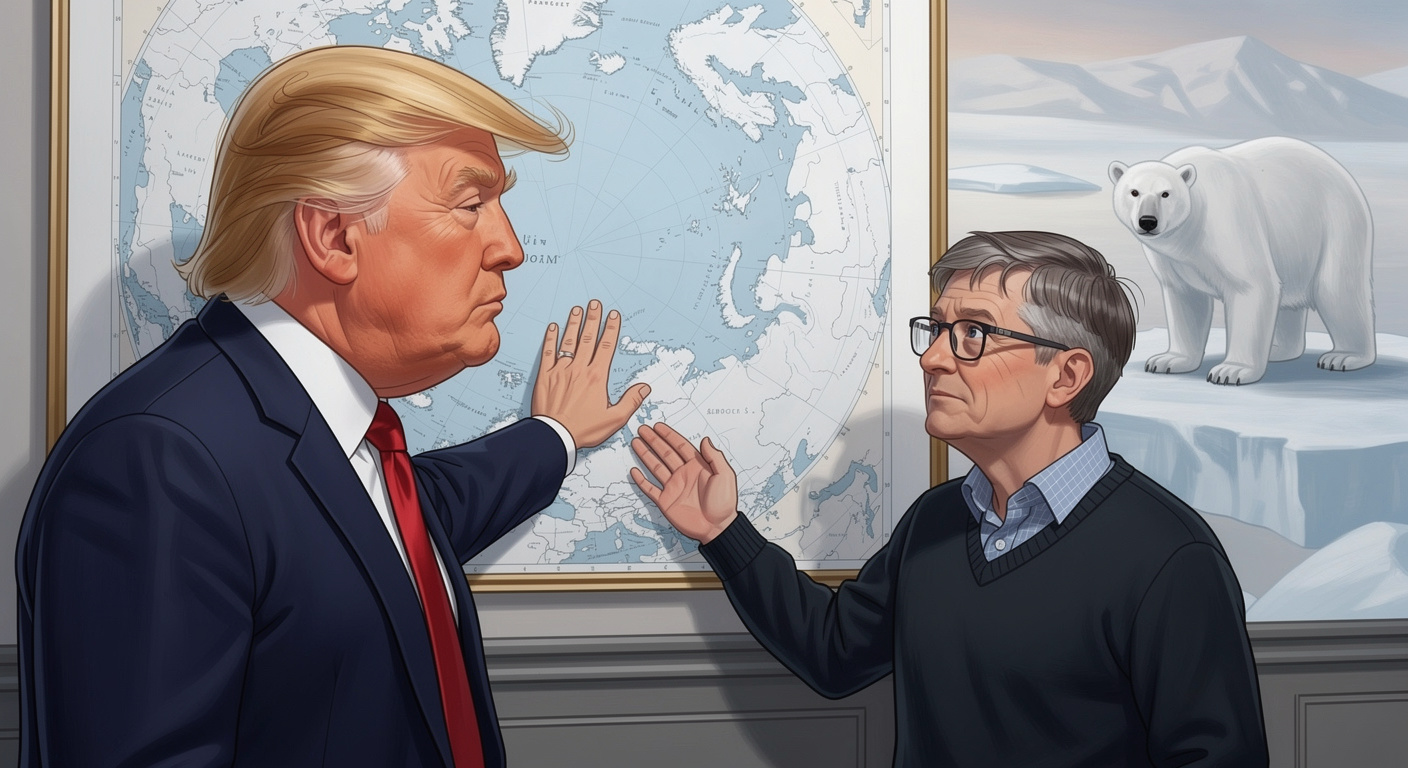
Of course, scientists, including the study’s lead author Jon Aars, remain cautious. He admits to being « surprised » to see the opposite of the expected weight loss, but warns that this resilience may only be temporary and that there is likely to be a breaking point. However, this finding does, in a way, validate the former US president’s climate vision. The bears have adapted. And this is exactly the argument put forward in a much-discussed memo by Bill Gates last year. The billionaire called for a focus on adaptation and reducing human suffering, rather than global temperature targets. This is no longer zoology, it is pure politics. The bears of Svalbard are becoming the number one piece of evidence for those who advocate an « adaptation first » approach. On the left, it’s a cold shower. The Vox website talks of a « glimmer of hope » but points out that the retreat of the ice cap is still linked to suffering bear populations elsewhere. Brian O’Donnell, of the Campaign for Nature, described Gates’ note as « misguided, » fearing that it could be used as an excuse to weaken emissions reductions. Environmentalist Bill McKibben did not mince his words: « Maybe we don’t need billionaires’ opinions on everything, » accusing Gates of downplaying climate tipping points as disasters pile up.
The irony of successful conservation
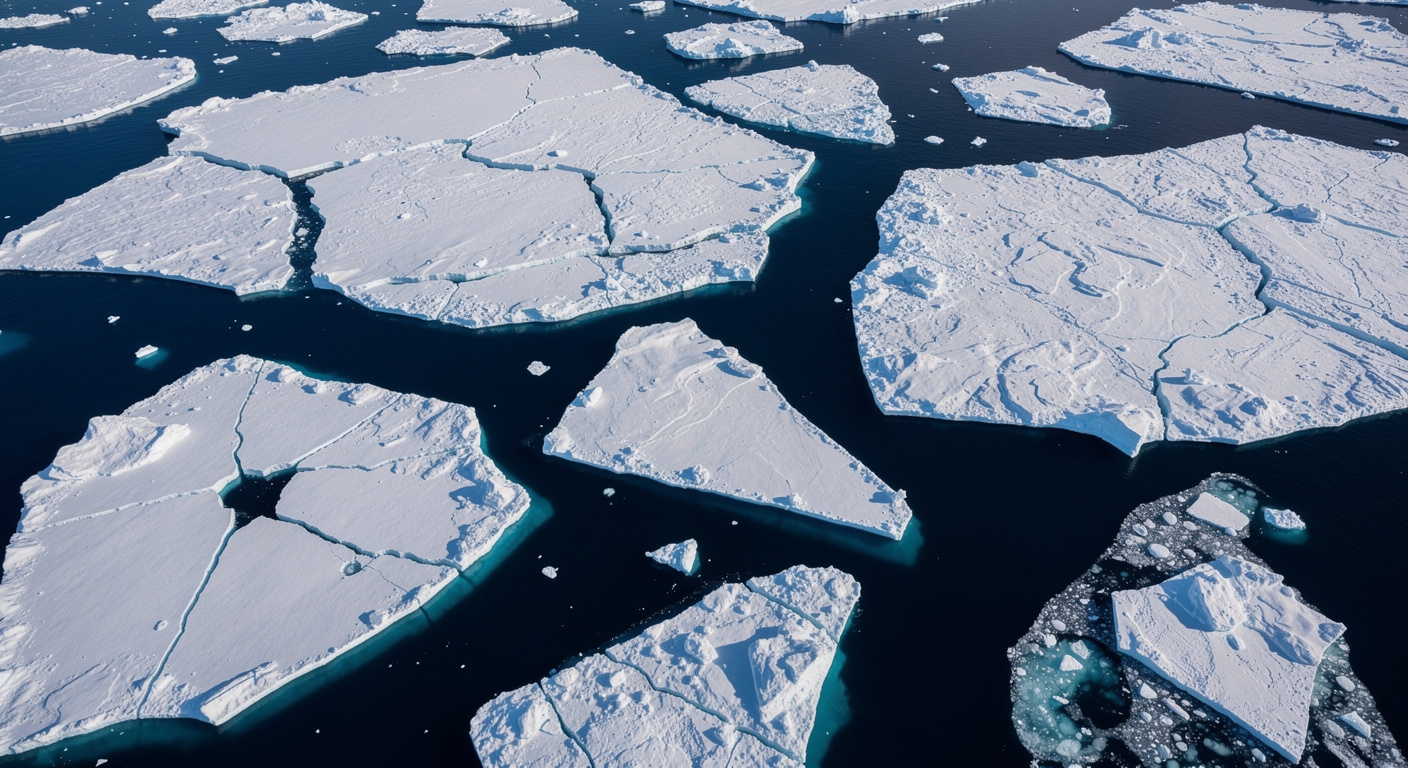
On the right, however, there are cries of outrage. The National Review praised Gates for making the discussion on adaptation « more respectable. » An editorial in the Wall Street Journal advocated realism: « We cannot stop climate change, so we must prepare for it. » Donald Trump fits perfectly into this gap. His administration had supported an aid plan for the Arctic, earmarking $50 million for polar bear conservation in Greenland—a real nod to climate impacts, even amid overt skepticism. But beware of oversimplification. What the research in Svalbard clarifies is that polar bears do not form a uniform bloc. There are 20 distinct subpopulations. While those in Svalbard grew fatter between 1992 and 2019 despite the warming of their basin, those in western Hudson Bay are experiencing the opposite nightmare: long ice-free seasons are starving them, creating an « energy deficit » that is causing their numbers to plummet.
The surprise in Svalbard can also be explained by history. After the 1973 Agreement on the Conservation of Polar Bears, hunting was curtailed. The bears benefited from legal protections and, over time, from the return of their prey. Less competition, seals sometimes concentrated on broken ice… This is adaptation, of course, but made possible by law, conservation, and Western wealth that finances research and the enforcement of rules.
The new face of pragmatism?
This is where Trump, Gates, and the bears converge, oddly enough. Trump’s position—skeptical of doomsday scenarios and insisting that « life goes on »—translates into a preference for adaptation over restriction. Bill Gates arrives at a similar conclusion from the opposite direction: he accepts the science, predicts that we will miss the 1.5°C target of the Paris Agreement, and argues that human well-being (agriculture, health, income) must be the guiding principle.
Ultimately, both camps converge on the idea of accepting change and spending money where it most quickly reduces immediate suffering. And if they were looking for a mascot for this ideology of pragmatism, they could hardly find a better one than a fat polar bear.
According to the source: newsweek.com
Created by humans, assisted by AI.